Here are three games spanning several decades. Your challenge, if you chose to accept it, is to match the players class to the games. To make it easier I will tell you that there are only 4 different players in the 3 games and one of the 4 players is a famous GM, one is an Expert, one is a B class player and one is a C class player. It shouldn’t be too difficult. If you want you can also guess which decade the games were played in.
After I get a few guesses I will fill in the info.
Game 1.pgn
Game 2.pgn
Game 3_0.pgn
So fill in the blanks with GM, E, B, C (and 70’s, 80’s, 90’s, 00’s, or 10’s) and place your guesses in the comments.
Game 1 ½–½ White_____ Black _____ decade_____
Game 2 0-1 White_____ Black _____ decade_____
Game 3 0-1 White_____ Black _____ decade_____
Hint # 1 Only two of the games are regular rated games.
Hint # 2 I am in more than one of the games.
Hint # 3 All the games were played in Canada
to be continued....
Thursday, June 24, 2010

Monday, May 17, 2010
Recent and Upcoming Chess Happenings
World Championship
The world championship recently wrapped up in Sofia, Bulgaria. Anand managed to retain his title with an exciting victory over Topolov with the black pieces in the last game. The final score was 6.5 – 5.5 and we were spared from having to see the title decided in rapid games. I was able to check in on some of the live games while they were in progress, and they were almost always exciting hard fought battles. Both competitors deserve credit for the fighting spirit displayed.
It is good that there is now one undisputed world champion. Hopefully FIDE will not mess around with the world championship cycle and create havoc, like they have in the past. It was disappointing that I did not see any news coverage in the mainstream media about this event at all.

FIDE Election
I don’t know what to make of the current FIDE president election. It appears to be between the incumbent Ilyumzhinov and former world chess champion Karpov. Both are Russian and whichever one manages to get the Russian nomination will probably win. It is turning into a sleazy campaign and does not lead me to think that FIDE will eliminate the corruption within it’s system anytime soon.

US Championship
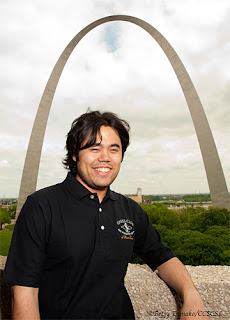
Three rounds are complete and the two favourites have to be Nakamura and Kamsky who share the lead with 2.5/3 after drawing with each other. The new format this year for this tournament is unusual as it combines a Swiss for the first 7 rounds after which the top 4 will continue in a round robin format. Top player could play each other more than once. I hope the format works out but I wonder how fair it will seem if tie breaks have to be used after round 7 to determine who continues in the round robin format. I expect and hope that Nakamura wins the title.
Lloydminster Chess
Of course the big event in Lloydminster will be when the above named GM Nakamura plays in our annual Battle at the Border Chess tournament Sept 4-6. It will be the biggest chess event to ever hit the Midwest. I have already started my training regime in preparation for this tournament, which includes playing the occasional online blitz game at chesscube and reminding myself that I really should finish that chess book that I started months ago. I did play some live chess against Al Tinio last week and although I had winning positions in at least two of the games I ended up being skunked 4.5-0.5 in 15 min games. I expected him to be even rustier then me but he’s been playing online.

Calgary Chess
The Calgary International is this weekend and should be exciting. Famous Philippine GM Eugene Torre, a close friend of Bobby Fisher, is playing. They have a reserve section that I could play in but I don’t have enough desire at the moment.

The world championship recently wrapped up in Sofia, Bulgaria. Anand managed to retain his title with an exciting victory over Topolov with the black pieces in the last game. The final score was 6.5 – 5.5 and we were spared from having to see the title decided in rapid games. I was able to check in on some of the live games while they were in progress, and they were almost always exciting hard fought battles. Both competitors deserve credit for the fighting spirit displayed.
It is good that there is now one undisputed world champion. Hopefully FIDE will not mess around with the world championship cycle and create havoc, like they have in the past. It was disappointing that I did not see any news coverage in the mainstream media about this event at all.

FIDE Election
I don’t know what to make of the current FIDE president election. It appears to be between the incumbent Ilyumzhinov and former world chess champion Karpov. Both are Russian and whichever one manages to get the Russian nomination will probably win. It is turning into a sleazy campaign and does not lead me to think that FIDE will eliminate the corruption within it’s system anytime soon.

US Championship
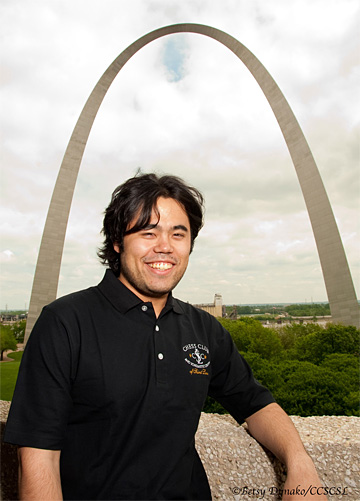
Three rounds are complete and the two favourites have to be Nakamura and Kamsky who share the lead with 2.5/3 after drawing with each other. The new format this year for this tournament is unusual as it combines a Swiss for the first 7 rounds after which the top 4 will continue in a round robin format. Top player could play each other more than once. I hope the format works out but I wonder how fair it will seem if tie breaks have to be used after round 7 to determine who continues in the round robin format. I expect and hope that Nakamura wins the title.
Lloydminster Chess
Of course the big event in Lloydminster will be when the above named GM Nakamura plays in our annual Battle at the Border Chess tournament Sept 4-6. It will be the biggest chess event to ever hit the Midwest. I have already started my training regime in preparation for this tournament, which includes playing the occasional online blitz game at chesscube and reminding myself that I really should finish that chess book that I started months ago. I did play some live chess against Al Tinio last week and although I had winning positions in at least two of the games I ended up being skunked 4.5-0.5 in 15 min games. I expected him to be even rustier then me but he’s been playing online.

Calgary Chess
The Calgary International is this weekend and should be exciting. Famous Philippine GM Eugene Torre, a close friend of Bobby Fisher, is playing. They have a reserve section that I could play in but I don’t have enough desire at the moment.

Tuesday, April 27, 2010
Not much to say
I see I haven't posted anything this month so I figured I would make this one short post.
I haven't played any chess lately and I haven't progressed any farther in my reading of Silman's Reassess Your Chess. Unfortunately we received bad news from relatives in the Philippines and so more important family issues have been my focus for the time being.
Today, though, I did get a chance to quickly go over the 3 games played in the world championship between Anand and Topolov. Very interesting so far. I am rooting for Anand but I must admit that I think Topolov will prevail. It was nice to see Anand recover from his poor first game loss with a strong second game win and a solid third game draw.
UPDATE
I see that Anand has won the fourth game with white. I was watching live from White's 20th move. After 22.Ng4 I tried to analyse the sac on h6 but of course I could not see if it was winning but I was pretty sure there must be at least a draw. Diagram shows position after 22...Rad8. Anand followed up with 23.Nxh6 and finished the game in style.

The over/under 1800 tournament is this weekend in Edmonton. I have no interest in playing, especially since I have dropped below 1800. I would be the highest rated player in the group and therefore have to psych myself up every game to play someone lower rated which I would find very difficult. I predict the winners will not even be teenagers in both sections!
I haven't played any chess lately and I haven't progressed any farther in my reading of Silman's Reassess Your Chess. Unfortunately we received bad news from relatives in the Philippines and so more important family issues have been my focus for the time being.
Today, though, I did get a chance to quickly go over the 3 games played in the world championship between Anand and Topolov. Very interesting so far. I am rooting for Anand but I must admit that I think Topolov will prevail. It was nice to see Anand recover from his poor first game loss with a strong second game win and a solid third game draw.
UPDATE
I see that Anand has won the fourth game with white. I was watching live from White's 20th move. After 22.Ng4 I tried to analyse the sac on h6 but of course I could not see if it was winning but I was pretty sure there must be at least a draw. Diagram shows position after 22...Rad8. Anand followed up with 23.Nxh6 and finished the game in style.

The over/under 1800 tournament is this weekend in Edmonton. I have no interest in playing, especially since I have dropped below 1800. I would be the highest rated player in the group and therefore have to psych myself up every game to play someone lower rated which I would find very difficult. I predict the winners will not even be teenagers in both sections!
Wednesday, March 31, 2010
Random "Deep Thoughts"
GM Kevin Spraggett, Canada's greatest player ever, is currently playing in an open tournament in San Sebastian, Spain. So far he has 3.5/4 points. Although he is now a controversial character in Canadian chess, back when I first started playing tournament chess, he was one of my chess heroes. It was exciting to read En Passant every two months and seeing his exploits as he tore through the North American tournament schedule and also through several cycles of the candidate tournaments. I noticed his second round opponent this week was WIM Silje Bjerke of Norway whom I played right here in Lloydminster at the BATB. Here is their game. My game against Silje can be found in a previous blog entry.
Bjerke-Spraggett.pgn
The Alberta championship and reserve is this weekend. It's a shame Eric Hansen and IM Proper are not playing this year. With their absence, I predict Pechenkin will win the championship. Although I would like to play in the reserve, I am just so tierd of travel and hotels. Since Jan it seems like every weekend I am travelling all over the praries. Three hockey tournaments, two swimming competitions, three schoolastic chess tournaments, Dr appointments, and work travel have taken me back and forth between Edmonton, Saskatoon, St. Paul, St Walburg, and Fort McMurray. A weekend at home sounds great now.
My next tournament might be a sectional in Edmonton or maybe the Saskatchewan Open if it is going to happen in April or maybe not for a while.
ps I'm on page 142 of Reassess Your Chess. Slow going but I'm almost half way through.
To be continued... got to go eat
Bjerke-Spraggett.pgn
The Alberta championship and reserve is this weekend. It's a shame Eric Hansen and IM Proper are not playing this year. With their absence, I predict Pechenkin will win the championship. Although I would like to play in the reserve, I am just so tierd of travel and hotels. Since Jan it seems like every weekend I am travelling all over the praries. Three hockey tournaments, two swimming competitions, three schoolastic chess tournaments, Dr appointments, and work travel have taken me back and forth between Edmonton, Saskatoon, St. Paul, St Walburg, and Fort McMurray. A weekend at home sounds great now.
My next tournament might be a sectional in Edmonton or maybe the Saskatchewan Open if it is going to happen in April or maybe not for a while.
ps I'm on page 142 of Reassess Your Chess. Slow going but I'm almost half way through.
To be continued... got to go eat
Sunday, March 21, 2010
Active/Rapid Games
The only remotely serious games I've played in over 6 months has been a handful of active games. Jamin in preparation for his Dragon Themed Tournament this weekend asked if I wanted to play a couple of games last week. I gladly obliged. Although I lost all the games, when I looked over them this week I don't think I played horrible. Here there are for your enjoyment or scorn. Jamin had requested I not post them before the tournament to keep his preparation hidden from Keith so I did. I did run into Keith at the Saskatoon regional’s and he asked me which line we played (the Re8 or Nc4). I replied evasively that I played the a6 line without mentioning Jamin's moves.
Game 1 - White
2010-03-12A.pgn
Game 2 - Black
2010-03-12B_0.pgn
Game 3 - White
2010-03-12C_0.pgn
I will also post the 2 Active games I played in Edmonton last month just for completness since I belive they will be rated.
2010-02-13A.pgn
2010-02-13B_0.pgn
Game 1 - White
2010-03-12A.pgn
Game 2 - Black
2010-03-12B_0.pgn
Game 3 - White
2010-03-12C_0.pgn
I will also post the 2 Active games I played in Edmonton last month just for completness since I belive they will be rated.
2010-02-13A.pgn
2010-02-13B_0.pgn
Sunday, February 28, 2010
Reassessing My Chess (PART 4)
Well I finally finished the next section in “Reassessing Your Chess”. It took me quite a while since I never seemed to have any extended free time, plus it was a long chapter. I had to make do with an hour here and there while waiting for my kids during their various activities or the odd lunch hour. Anyway here is my continuing “cliff notes” of RYC. Two good websites I found with pgn versions of the books examples are: http://dswitzer.net/chess/RYC/ryc.htm and http://www.chessgames.com/perl/chesscollection?cid=1005920 .
PART 4: Minor Pieces in the Middlegame
Introduction:
This section concerns the differences between minor pieces. Basically, how to recognize the situation, create an imbalance, nurture your favourable imbalance, weaken your opponents pieces, and finally capitalize on your advantage.
Chapter 1: The Bishop
Bishops can be divided into three categories:
1. Good- central pawns not on it’s color
2. Bad – central pawns block it
3. Active – can be either bad or good but it serves an active function
First Rule Concerning Bishops: If you have a bad bishop you must correct it in one of three ways.
1. Trade it for a better enemy piece.
2. Make it good by moving your central pawns of it’s color.
3. Make it actice by getting it outside your pawn chain.
Second Rule Concerning Bishops: Bishops are strongest in open positions.
Third Rule Concerning Bishops: They tend to beat out Knights in Endgames with passed pawns on both sides of the board.
Using The Bishop: These paragraghs contain numerous examples with lengthy explanations of the thought process involved in creating and following through with the correct plan to win with bishops. Some of the highlighted rules of thumb that stood out to me:
• Don’t play for traps hoping your opponent does something stupid
• After deciding your move ask yourself how it improves your position
• A pawn chain should be attacked at the base. It is not necessary to win it but to make it move or trade it
• Never pass (ie make a waiting move) and hope that a move comes to you next time. Every move should strengthen you position somehow.
• All calculation is done with a goal already in mind
• In an open position one must react quickly. Time is of the essence due to the open lines.
• In a closed position attacks are initiated with pawn breaks. Slow manoeuvring is alright.
Chapter 2: Understanding Knights
First Rule of Knights: They need advanced support posts to be effective.
• Knights on the 1st or 2nd rank are purely defensive
• Knight on the 3rd rank is defensive and ready to move to a more active post.
• A knight on the 4th rank is as good as a bishop and well positioned for attack and defense.
• A Knight on the 5th rank is often superior to a bishop.
• A Knight on the 6th rank is often a winning advantage.
Second Rule of Knights: They are useful pieces in closed positions.
Third Rule of Knights: They are the best blockaders of passed pawns.
Fourth Rule of Knights: They are usually superior to Bishops in endings with pawns on only one side of the board.
More “Rules of Thumb”
• In closed positions pawn breaks on the wing take on great importance.
• Don’t be afraid of “ghosts” ie. Your opponents threats that don’t go anywhere.
• When attacking the king don’t just check. First cover the escape squares and then build a mating net.
Chapter 3: Dogs vs. Cats / Bishops vs. Knights
This chapter contains various examples where one type of minor piece wins out over the other type of minor piece.
The Anti-Knight Technique: Take away all the advanced support points of your opponents Knights and they will be ineffective and your Bishops have a good chance of winning. Before entering into a B vs. N position ask yourself the following:
1. Is the position open or closed?
2. Will there be support points for his Knights?
• If so can his Knights get to them?
• Does it matter if they do?
• Can your Bishop reach an even better position?
More “Rules of Thumb”
• YOU MUST MAKE USE OF YOUR FAVORABLE IMBALANCES.
• Never leave yourself with no favourable imbalance or chances to create them.
• If center files are open it is rarely a good idea to decentralize one forces.
Chapter 4: The Power of Two Bishops
The usual way to combat two Bishops is to do one of three things:
1. Create a blocked position
2. Create advanced support points for your Knights
3. Trade off one of your opponents B’s and obtain a more manageable B vs. N position.
Some More Rules of thumb (some repeated)
• If your against two powerful Bishops trade your B or N for your opponents B and leave a more manageable B vs. N situation.
• A Q + N is a better combination than a Q + B
• The way to battle Knights is to take away all their advanced support points
Chapter 5: The Two Knights Victorious!
Some examples of positions (usually closed) where two Knights prove superior.
Problems:
4 test problems to solve that demonstrate the ideas taught in the previous teachings of the section.
PART 4: Minor Pieces in the Middlegame
Introduction:
This section concerns the differences between minor pieces. Basically, how to recognize the situation, create an imbalance, nurture your favourable imbalance, weaken your opponents pieces, and finally capitalize on your advantage.
Chapter 1: The Bishop
Bishops can be divided into three categories:
1. Good- central pawns not on it’s color
2. Bad – central pawns block it
3. Active – can be either bad or good but it serves an active function
First Rule Concerning Bishops: If you have a bad bishop you must correct it in one of three ways.
1. Trade it for a better enemy piece.
2. Make it good by moving your central pawns of it’s color.
3. Make it actice by getting it outside your pawn chain.
Second Rule Concerning Bishops: Bishops are strongest in open positions.
Third Rule Concerning Bishops: They tend to beat out Knights in Endgames with passed pawns on both sides of the board.
Using The Bishop: These paragraghs contain numerous examples with lengthy explanations of the thought process involved in creating and following through with the correct plan to win with bishops. Some of the highlighted rules of thumb that stood out to me:
• Don’t play for traps hoping your opponent does something stupid
• After deciding your move ask yourself how it improves your position
• A pawn chain should be attacked at the base. It is not necessary to win it but to make it move or trade it
• Never pass (ie make a waiting move) and hope that a move comes to you next time. Every move should strengthen you position somehow.
• All calculation is done with a goal already in mind
• In an open position one must react quickly. Time is of the essence due to the open lines.
• In a closed position attacks are initiated with pawn breaks. Slow manoeuvring is alright.
Chapter 2: Understanding Knights
First Rule of Knights: They need advanced support posts to be effective.
• Knights on the 1st or 2nd rank are purely defensive
• Knight on the 3rd rank is defensive and ready to move to a more active post.
• A knight on the 4th rank is as good as a bishop and well positioned for attack and defense.
• A Knight on the 5th rank is often superior to a bishop.
• A Knight on the 6th rank is often a winning advantage.
Second Rule of Knights: They are useful pieces in closed positions.
Third Rule of Knights: They are the best blockaders of passed pawns.
Fourth Rule of Knights: They are usually superior to Bishops in endings with pawns on only one side of the board.
More “Rules of Thumb”
• In closed positions pawn breaks on the wing take on great importance.
• Don’t be afraid of “ghosts” ie. Your opponents threats that don’t go anywhere.
• When attacking the king don’t just check. First cover the escape squares and then build a mating net.
Chapter 3: Dogs vs. Cats / Bishops vs. Knights
This chapter contains various examples where one type of minor piece wins out over the other type of minor piece.
The Anti-Knight Technique: Take away all the advanced support points of your opponents Knights and they will be ineffective and your Bishops have a good chance of winning. Before entering into a B vs. N position ask yourself the following:
1. Is the position open or closed?
2. Will there be support points for his Knights?
• If so can his Knights get to them?
• Does it matter if they do?
• Can your Bishop reach an even better position?
More “Rules of Thumb”
• YOU MUST MAKE USE OF YOUR FAVORABLE IMBALANCES.
• Never leave yourself with no favourable imbalance or chances to create them.
• If center files are open it is rarely a good idea to decentralize one forces.
Chapter 4: The Power of Two Bishops
The usual way to combat two Bishops is to do one of three things:
1. Create a blocked position
2. Create advanced support points for your Knights
3. Trade off one of your opponents B’s and obtain a more manageable B vs. N position.
Some More Rules of thumb (some repeated)
• If your against two powerful Bishops trade your B or N for your opponents B and leave a more manageable B vs. N situation.
• A Q + N is a better combination than a Q + B
• The way to battle Knights is to take away all their advanced support points
Chapter 5: The Two Knights Victorious!
Some examples of positions (usually closed) where two Knights prove superior.
Problems:
4 test problems to solve that demonstrate the ideas taught in the previous teachings of the section.
Saturday, February 13, 2010
Active Chess in Edmonton
I was in Edmonton this weekend and figured I would play a couple of Saturday afternoon active games. I did not know that the Edmonton Chess Club was now CFC rating their Saturday games. If I had known, I might not have bothered. The CFC active ratings are so unrepresentative of strength that they are a joke and I have been avoiding CFC active tournaments on principle. As an example from the CFC Top Alberta Active List; 19 Eric Hansen 1924?, 36 Thomas Kaminski 1756?, 43 Terry Chaisson 1715. Since I was already there, I went ahead and played.
Both my games were loaded with terrible blunders on my part. Missing one or two move replys, and even thinking I won a piece and not noticing an opponent's Night was protectiong his Bishop. I did win the first game and draw the second but they were games that I shoud have won easily. I doubt that I will ever post them, not because there is nothing to learn from them, but because I am embarassed by my mistakes.
I have been very busy with family commitments and work related issues lately so I have not played much and I am still stuck in the middle of Part IV of "Reassess Your Chess".
Both my games were loaded with terrible blunders on my part. Missing one or two move replys, and even thinking I won a piece and not noticing an opponent's Night was protectiong his Bishop. I did win the first game and draw the second but they were games that I shoud have won easily. I doubt that I will ever post them, not because there is nothing to learn from them, but because I am embarassed by my mistakes.
I have been very busy with family commitments and work related issues lately so I have not played much and I am still stuck in the middle of Part IV of "Reassess Your Chess".
Subscribe to:
Posts (Atom)